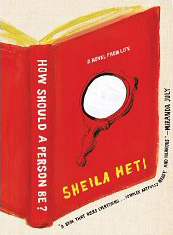
Book review: Sheila Heti’s How Should a Person Be?

SheilaHetiFirst impressions

I was so crazy about this book after reading the first seven pages that I posed a question on my Facebook page: “Is is possible to fall in love with someone just from their writing?” But, interestingly, my reactions to the book became more complicated as I continued to read, and my reflections about why this was so affected how I analyzed the book.

Initially, I loved the narrator’s honesty. Maybe it was an obvious attention-getter to put comments about her technique for giving blow jobs on the third page, but also in those first pages was a story about her friend Margaux that won me over to the writer’s voice completely. The heartwarming and funny story about Margaux finished with these words:

If I had known, when I was a baby, that in America there was a baby who was throwing up her hands and saying, first words out of her mouth, Who cares? and that one day she’d be my best friend, I would have relaxed for the next twenty-three years, not a single care in the world.

What is How Should a Person Be? about?

It’s a book that asks fundamental questions about how to find one’s path, how one can reconcile one’s “real” self with the self that is presented to the world. It talks about Art: what makes art beautiful or ugly? There are parallels between Art and a person as a work of art. Can we be lovable in spite of the inner ugliness that we’re afraid to reveal to others?

The book is about how Sheila (the character), in a mentally (and sometimes physically) torturous process, finds answers to her existential questions. Sheila’s psychotherapist tries to help Sheila with her problems, which all have to do with not carrying through. Why is Sheila blocked in her attempt to finish writing her play? Why do her most loving relationships, including a marriage, end after a brief time? The therapist gives an intellectual explanation, saying that it isn’t good to be like Peter Pan—the Puer aeternus—the eternal child.

Such people will suddenly tell you they have another plan, and they always do it the moment things start getting difficult. But it’s their everlasting switching that’s the dangerous thing, not what they choose.
They must choose work that begins and ends in a passion, a question that is gnawing at their guts, which is not to be avoided but must be realized and lived through the hard work and suffering that inevitably comes with the process.

But Sheila can only come to accept herself, and her path—to finally start growing up—because of Margaux’s friendship and love. At the beginning of the book, Sheila is very distrustful of friendships with women. She meets Margaux at a party, and the two are immediately attracted to each other. They admire each other’s artistic talent—Sheila is a writer and Margaux is a painter—but are tentative in developing their friendship.

Sheila doesn’t realize for a long time that her friendship with Margaux is unbalanced. Margaux is willing to doing something she’s afraid of—letting Sheila record their discussions about Sheila’s play—in order to help Sheila write, but Sheila is afraid to expose herself to Margaux in a similar way. In fact, when she can’t bear her writer’s block and the ugliness she knows is within herself, she reacts not by confiding in Margaux, but by running away.

When Sheila figures out that running away won’t solve her problems, and returns home, she finds a letter from Margaux. The letter explains Margaux’s deep sense of abandonment and hurt. Margaux writes “I cannot be your sometime friend.”

When Sheila goes to her friend to try to repair the damage, Margaux explains that everyone has many variables and invariables in their lives, and we construct our lives around the invariables. To Margaux, Sheila is an invariable.

Sheila realizes, “No word had ever sounded to me more like love.” She finally understands Margaux’s value—and by extension, her own.

There was only one Margaux…I had never wanted to be one person, or even believed that I was one, so I had never considered the true singularity of anyone else.

Margaux is an ideal teacher for Sheila because in addition to her words and actions as a steadfast friend, she proves herself through her art. Margaux and another painter friend of Sheila’s, Sholem, have a contest to see who can produce the ugliest painting. Sholem does his painting immediately, and is revolted by it. Margaux delays doing her painting for a long time, explaining later that she had a hard time knowing what to characterize as “ugliness”. When she finally completes her painting, it has a lot of ugly features, but Sholem says, “Your touch is all over the painting,” and he calls this “the saving grace.” Margaux can’t obliterate her strength as a painter. “Your mark is there in everything you do!” says Sholem.

Margaux makes Sheila understand that in her writing, she has to expose her true self, including all the ugliness. Paralling this philosophy, the “real” Sheila Heti includes ugliness in How Should a Person Be? An utterly horrifying dream shocks readers in the first pages of the book. Later, there are other dreams so awful you can’t help but think, “What kind of monstrous, perverted subconscious could produce this kind of dream?” Then there is “character” Sheila’s sexual obsession with a man who treats her badly. This, too, can be painful to read, but Heti is brave in revealing the polar extremes of life at its most intense, both the strength of love and the shittiness of abuse and torture.

Moreover, just as Margaux’s touch is admirable even in her most ugly painting, Heti’s writing is brilliant whether she is describing beauty or despair. For example, when she learns how she has hurt Margaux by running away without an explanation, Sheila thinks:

I had hurt Margaux beyond compare. The heat of shame was the heat of my body. There was not one cell in my body unsullied by what I had done.

Sheila’s moments of ecstasy are just as intense as her pain:

I felt so moved then—shivering at the thought of a divine love that accepts us all in our entirety. The bar around us became rich and saturated with color, as if all the molecules in the air were bursting their seams—each one insisting on its perfection too.

Heti is creative in her insights, but also in her writing formats. She’s playful and wickedly funny. Most of the book’s dialogue is in script form, mirroring Sheila’s attempt to write a play. Letters and emails are presented as numbered lists of ideas—surely not realistic, but perhaps used as a device to show us how Sheila is trying to analyze everything.

As I progressed through the book, though, my initial infatuation with it became more qualified. I started to get impatient with the narrator’s repetitive problems, her inability to write her play and answer her existential questions. I became irritated by the adolescent quality of Sheila’s incessant questioning and futile escapist adventures.

However, the book eventually reached a satisfying conclusion. It’s one of those books that requires readers to think through the confusing parts. By thinking and rereading, I could appreciate how the various relationships, stories, and themes within the novel are all interconnected. I’m curious about how other readers have reacted to the book. I know there have been rave reviews about it (and not just on the jacket blurbs), but this book wasn’t attempting to win a popularity contest: that would be counter to its whole point!

This book champions love, friendship, and Art, but it shows that all of them require persistence, faith, sacrifice, and exposing oneself completely.
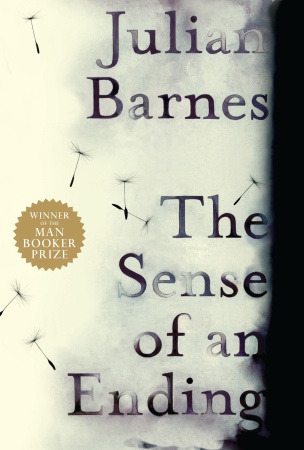
Book review: The Sense of an Ending by Julian Barnes

Cover of The Sense of an Ending by Julian Barnes

In The Sense of an Ending, Julian Barnes has written with an understated courage about the tragedy of a man’s coming face to face with his own failings and self-deception near the end of his life.

It’s a sad book because the protagonist, Anthony Webster, gains his wisdom too late—by his own estimation. It’s too late to change his mistakes or to make amends for them. All he has left is “regret, guilt and remorse”—with remorse being the strongest and most terrible of the three, according to Anthony.

Yet it’s a beautiful book, because it is beautifully written. Anthony is carefully, sympathetically drawn. He is a kind of Everyman. He is not evil (though when shown a letter he had written four decades earlier, he is shocked by his own jealousy-provoked viciousness); rather he is by turns bumbling, self-centred, passive, and insensitive. I can only gasp at Barnes’s writing skill; somehow, he makes us like Anthony in spite of (or because of?) his ordinariness, his lack of heroic qualities.

The Sense of an Ending is a very good novel until the last four pages. But it’s the shocker ending that most displays the author’s virtuosity. Like Dostoyevsky’s The Brothers Karamazov, like Bill Gaston’s The Good Body, this is a book that demands rereading to figure out just how the writer was able to put it all together with such ingenuity.

I don’t have to give away the ending to explain the source of the book’s power. I think it comes from the comparison of our own lives with Anthony’s. If we are old, do we share his emotions, or have we lived more fully? If we are middle-aged, this book is a warning. Anthony’s revelations come too late. There were points in his life when he could have been more honest with himself and others about what he felt and what he wanted. He could have made other choices instead of going with the current, following the path of least resistance.

I don’t need Anthony’s warning.

Going through a textbook mid-life crisis, I changed my life completely between the ages of 48 and 52. Some of the choices I made were planned—going back to school to train for a new career as a writer and leaving my husband—but others were not. I didn’t count on wrecking my knee and losing my running career, which was such a big part of my identity. I didn’t know my coach George Gluppe’s health would deteriorate rapidly and that he would pass away last April. I wouldn’t have chosen to have everything in my life go all topsy-turvy within the space of a few years.

But there were many stimulating and joyful beginnings, times of being amazed by the realization: It’s not too late!
There are also those middle-of-the-night times of panic, when the darkness spreads to gut-deep despair and my fear: I’ve left it too late!

But I can only start from today, and welcome my unfolding new life. I don’t know how it will all turn out. I don’t know what my “sense of an ending” will be, two or three or four decades from now (if I live that long). All I can know for sure is that I won’t share Anthony’s remorse about not having tried to change.

WordNerds: Kafkaesque

Since I recently wrote a post that quoted Franz Kafka, I decided I’d like to write about the word “Kafkaesque” today. Imagine being such a famous writer that an adjective is created from your name!

Canadian Oxford’s definition follows:

Kafkaesque: (of a situation, atmosphere, etc.) impenetrably oppressive, nightmarish, in a manner characteristic of the fictional world of Franz Kafka.

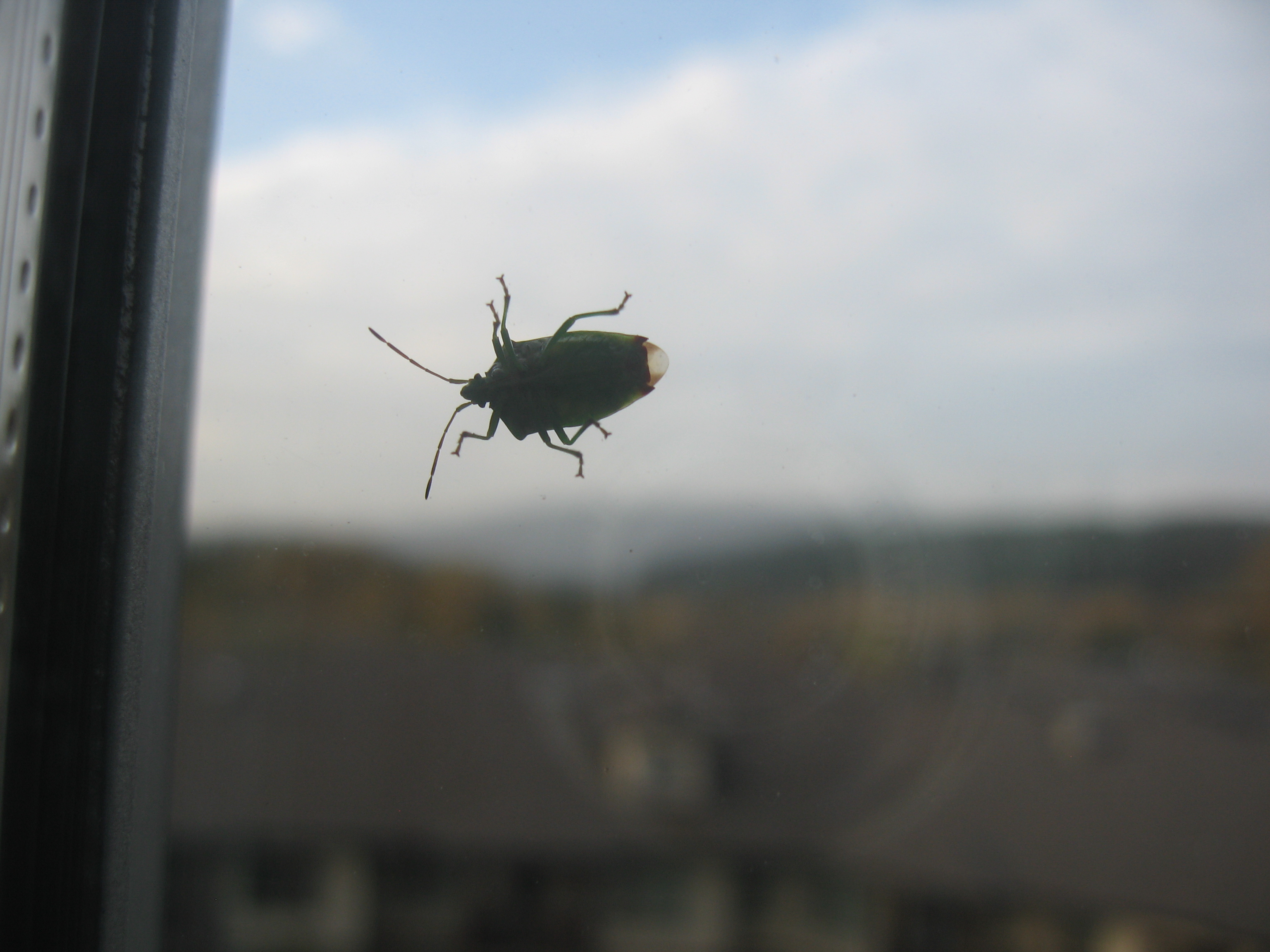
beetle on window

Someone took this photo of me this morning!

Kafka is perhaps most famous for his 1915 novella The Metamorphosis, in which his protagonist Gregor Samsa wakes up one morning to find he has been inexplicably transformed into an ungeheuren Ungeziefer (usually translated as “monstrous vermin” or sometimes simply “bug”).

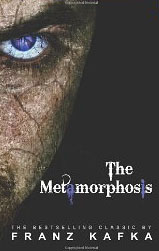
cover of The MetamorphosisApparently, Vladimir Nabokov, who was not only a great writer (Lolita, Pale Fire etc.) and literary critic but a serious lepidopterist, interpreted Kafka’s text to mean that Gregor was a 3-foot-long beetle.

The book has been studied extensively in universities and has been adapted for the screen and stage many times, most recently as Metamorphosis the Movie (2012), directed by Chris Swanton. According to Wikipedia, this full-length feature film “captures both the intense sadness as well as the rich humour and sense of the bizarre that runs throughout Franz Kafka’s work.”

Book Review: Bill Gaston’s The Good Body

Cover of The Good Body by Bill Gaston

The Good Body was published in 2000.

With The Good Body, his 2000 breakthrough novel, Bill Gaston proved two things: he is a writer of dazzling virtuosity, and a man with a huge heart. How else to explain the way he can get inside the minds of such a wide variety of characters, each flawed, whether pitiful, cruel, despicable, or self-righteous—and make us able to see each person in a sympathetic light? Gaston’s protagonist in this novel is Bobby Bonaduce, a man who’s been a minor league hockey player for twenty years. Now, at forty, he knows his 50-second period of ice time during an emergency call-up from the Leafs will be his only taste of the big time. Worse, he’s been diagnosed with multiple sclerosis and is already experiencing symptoms of his body’s betrayal.

When his minor league Tulsa team folds, Bonaduce decides to return to his hometown, Fredericton. It’s an impulsive decision propelled by a letter from his son Jason. Bonaduce has rarely seen his wife Leah or his son since he abandoned both nearly twenty years before. Now, Jason has written that he’s going to the University of New Brunswick and will play on the varsity hockey team. Bonaduce, in denial about his MS, plans to enrol in the university as a masters student in creative writing and join his son on the team.

A combination of bravado, determination, and plagiarism allows Bonaduce to achieve the first part of his goal—getting accepted into the grad program in creative writing.

After that, his struggles are constant and heart-wrenching. Living in a decrepit house with a group of students, Bonaduce strikes up a friendship with an overweight young woman. The two enjoy playing Yahtzee, a game played with five dice and their many permutations. If life is a roll of the dice, Bonaduce has an endless string of bad rolls. Yet against the background of his ever-worsening MS symptoms, Bonaduce fights with immense spirit. He’s not allowed to play on the varsity team. His fellow students and teachers, mostly humourless academics stuck in their ivory-tower world, repel his attempts at friendship.

As if his physical and financial problems aren’t enough, Bonaduce is also emotionally devastated. He is still in love with Leah, but she is in a long-standing relationship with a lawyer named Oscar, a man who couldn’t be less like Bobby Bonaduce. And Bonaduce is obsessed with his hope of establishing a good father-son relationship with Jason, who remains distant and uncaring. Gaston is masterful at depicting the torment Bonaduce goes through, his adolescent-like desire for Leah and the biological power of his guilt about the son he’s never gotten to know.

Gaston’s writing is so extraordinary that I could probably find quote-worthy examples on every page of the book. He’s especially good at his portrayals of minor league hockey, whether using his authorial voice or through Bonaduce’s class writing “samples.” We understand both the shame of being “only” a minor-league player, and the overriding love of the game that motivates these men.

On the ice is where it really happened. The brilliance of some. All senses sparking, working at the widest periphery, aflame with danger and hope both, seeing the whole picture, the lightning-fast flux of friends and enemies, the blending of opportunity and threat. Words didn’t stand a chance here. Words were candy wrappers, dead leaves.

I could relate to Bonaduce’s experience of being an aging athlete. It’s hard to let go. It’s never the same being a coach or spectator as being an athlete. The middle-aged body can still feel a joy in action that brings back the sense-memory of how the body moved in its prime. It’s only the damning evidence of stopwatch or camera that shows the body’s deterioration.

As Bonaduce’s life spirals down towards catastrophe, we cringe, we bleed at life’s unfairness. We love this man. Despite his flaws, he’s a hero because he gives everything, he keeps fighting, he finds redeeming slivers in the wreck his life is becoming. This is a book that gets down to life’s basics: love, sex, sensual beauty, mortality. Here is Gaston writing about what Bonaduce is thinking after his one illicit encounter with Leah in a local motel:

C’mon Leah, you did feel it. Pretty little angel eyes. Angel eyes, what a perfect two-word description of love, love that went both ways.

And more about the intimacy that Bonaduce and Leah can’t deny:

Each time they met eyes, they got a version of each other that was surprising and too too full, a potency forcing them to look away, except for a brief few times when they made themselves hold it.

Even Oscar, after finding out about the encounter, acknowledges that Leah and Bonaduce have “unfinished business.” But it’s Bonaduce who knows “there is no end to that kind of business.” The sexual attraction between him and Leah is inextinguishable.

It takes a fearless, peerless writer to make us care about his protagonist as much as we care about Bonaduce, and then give his story a tragic conclusion. But this is real life; this is what makes The Good Body a work of great literature. Redemption comes from Gaston’s sympathetic insight into a wide variety of characters, all fully-fleshed; the gallows humour that pervades Bonaduce’s thoughts; and the indomitable spirit that enables this hero to experience friendship, love, intellectual challenges, and hope in the face of terrible odds.

***

Bill Gaston’s latest novel, The World, was recently given a rave review by Diane Baker Mason in The Globe and Mail. Read it here.

I never read a review of a book before I write my own review, because I don’t want my reading or critiquing to be influenced by someone else’s opinion. However, while googling for a photo of The Good Body I accidentally came across a review of it that I thought was spot-on and profound. If you’re not already sick of reading about this book, read Angie Abdou’s review here.

A writer’s solitude: Kafka’s words

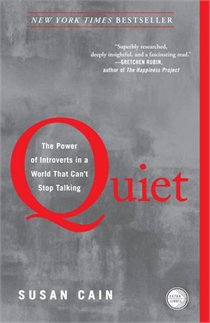
The following paragraph was quoted in Susan Cain’s recently published book Quiet: The Power of Introverts in a World That Can’t Stop Talking.

You once said that you would like to sit beside me while I write. Listen, in that
case I could not write at all. For writing means revealing oneself to excess;
that utmost of self-revelation and surrender, in which a human being, when
involved with others, would feel he was losing himself, and from which,
therefore, he will always shrink as long as he is in his right mind… That is
why one can never be alone enough when one writes, why there can never be
enough silence around one when one writes, why even night is not night enough.

—Franz Kafka (1883–1924)

Photo of the book Quiet: The Power of Introverts in a World That Can't Stop TalkingQuiet is a wonderful and reassuring book for those of us who are happiest when we have plenty of time for reading, writing, and reflection. Cain presents the latest research in the fields of neurobiology and psychology as she discusses why the ways in which  introverts think and work are just as essential to modern society as the heavily-promoted outgoing, action-based styles of extroverts.

This book will give people confidence to choose a career that will help them achieve their potential and find happiness and fulfillment. Other readers may re-evaluate their choices and make life-changing decisions.