A writing persona named Marilyn

I sometimes write using a pen name of Marilyn, and some of my stories feature a character named Marilyn who is a fantasy version of myself. I think of her as my twin. She is someone whom I could have been, but am not. She writes about things that I’m not brave enough to publish using my “real” identity.

I’ve always liked the name Marilyn, and mostly that’s because I had an English teacher at Donview Junior High School named Marilyn McNeill.
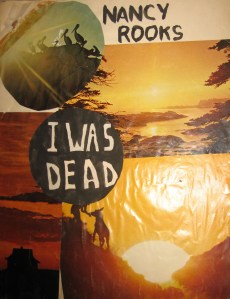
cover of a grade nine story

One of my grade nine writing assignments for Mrs. McNeill

Mrs. McNeill must have been in her early thirties when I knew her. She dressed simply, usually in plain skirts and blouses that often appeared a little rumpled, but to me she was attractive and sexy, the kind of woman I wanted to grow up to be. She still appeared girlish, with her beautiful thick blonde hair usually tied carelessly in a ponytail at the back of her neck.

Mrs. McNeill was youthful, but underneath her quiet voice was a steely quality. She was an ideal teacher for confused, hormone-driven junior high school students because she simultaneously cared deeply about us, yet would tolerate no nonsense. She was one of those rare teachers who preferred to treat 12- to 15-year-olds as adults; those of us who rose to this challenge gained enormously from the respect she showed us and the academic demands she made upon us.

As for the others—well, I remember a day when one girl wandered into class a few minutes late, bringing with her the unmistakeable aroma of marijuana. Mrs. McNeill turned to her, and said very quietly, in a voice that could have frozen a hot toddy in hell: “Don’t you dare ever enter this classroom again reeking the way you reek.”

Mrs. McNeill was an excellent English teacher, and as an aspiring writer I was lucky to have her, but her writing advice was not the most important influence she had on me.

To me, it was more significant that she was a role model. She was an unusual teacher in that she sometimes shared little snippets of her personal life with us. She’d refer to funny things her husband Richard had said or done. These were only the briefest of comments, yet they offered me a glimpse into what a happy marriage could be like, a marriage less traditional than my parents’, where my father worked an office job and my mother was a stay-at-home mom for three kids. I thought Mrs. McNeill was very special for sharing more of herself than what she knew about English grammar or literature. It meant her relationship with us went beyond our teacher-student roles to include elements of trust and friendship.

Mrs. McNeill did one unforgettable thing for me that went far beyond any helpful criticism or words of praise she gave me on my writing assignments.

In grade nine, I was in the school play (Noel Coward’s Blithe Spirit), where I played the part of the eccentric medium, Madame Arcati. One day, in preparation for a dress rehearsal, Mrs. McNeill was helping our Theatre Arts teacher by doing our makeup. When it was my turn, as she applied mascara to my eyes, she said, “You have such beautiful deep-set green eyes!”

Few compliments I’ve ever received in my life have meant that much to me.

I know Mrs. McNeill didn’t make that remark without thinking. She understood how much her words would mean to the tiny, skinny girl who had to wear glasses all the time and hated them. She knew that a compliment that would boost my confidence about my femininity would help me far more than any number of A-pluses she could give me on English assignments.
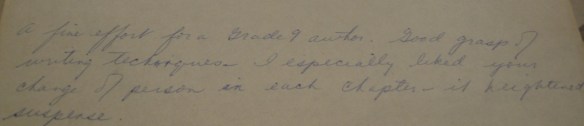
Teacher's comments on a writing assignment.

Mrs. McNeill’s concluding comments about my “novel”. One sentence she liked was, “The thoughts wound ceaselessly around inside of me, coming faster and faster and faster as if they were crushing me out, a whirling windmill spinning to eternity inside of me.”
Some cool and funny editing markup symbols

Aside

My readers might enjoy looking at this article “7 key elements of micro-editing” by Laura Hale Brockway. It does a good job of reviewing the basics of editing at the sentence level. At the fun level, it has a cool chalkboard graphic showing some editing markup symbols you might never have seen before!

WordNerds: How many of these German words used in English literature could you define?

Aside

Most editors are familiar with Leitmotiv, but what about Knittelvers or Wahlverwandtschaft? Take a look at this post from one of my favourite online writers. You can follow her on Twitter @miette.

http://miettecast.tumblr.com/post/36813650906/the-elective-affinities

A labyrinthine search for the meaning of “rhadamanthine”: from a condo elevator to Ranger Gord’s Campfire Stories

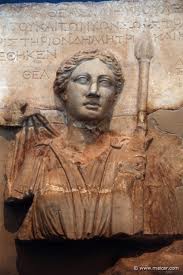
Greek god Rhadamanthys

Rhadamanthys, a Greek god who was judge of the Underworld.

It’s pretty amazing how far I’ll go in my quest to understand and explain words that, to me, are new and cool.

It turns out that “rhadamanthine” is actually a very old word, since it’s the adjective form of Rhadamanthys (or Rhadamanthus), a character from Greek mythology.

But I didn’t know that as I descended the elevator in my condo building early yesterday morning. The screen that everyone stares at as they’re coping with the embarrassing silence during long elevator rides was not on its sports, news, currency exchange, weather, or ads pages. Instead, it was showing the rarer “Word of the Day” screen, and the word “rhadamanthine” jumped out at me because I had never seen it before. Tantalizingly, I had time to skim the definition but not commit it to (middle-aged) memory before the door opened at ground level and I had to leave the elevator.

I tried to read the definition again on all my elevator trips that day, but the screen was always flashing news or ads. I then turned to my trusty Canadian Oxford Dictionary, which told me about Rhadamanthys but didn’t define the adjective derived from it. Next, I went online to dictionary.com. This source was thorough in its definition of Rhadamanthys:

1. Classical Mythology. A son of Zeus and Europa, rewarded for the justice he exemplified on Earth by being made, after his death, a judge in the Underworld, where he served with his brothers Minos and Aeacus.
2. An inflexibly just or severe judge.

Though it listed the adjective “rhadamanthine”, it didn’t give me a definition. Instead, it supplied links to places where the word was used. Thus it was that I had the unexpected pleasure of travelling back in time to a July 2006 blog post on Ranger Gord’s Campfire Stories.

There, I found the definition I was seeking. Rhadamanthine means “strictly and uncomprisingly just”. (According to Ranger Gord, he found this definition on dictionary.com—why wasn’t it there for me?)

But please don’t stop here! You’ve simply got to read “Introducing Ranger Gord’s Radamanthine Citations” post yourself. Ranger Gord explains the origins of rhadamanthine in scholarly detail, but the humour of the post comes from the juxtaposition of his own writing with some crude paragraphs he includes in the words of a park user who has violated the requirement to have a fishing license. The violator is extremely profane, can’t spell, and has a bad attitude, but he just can’t help being funny. I love his last sentence:

what the fuck has this world come to? what happened to the days where you walked around with a loin cloth on, and ate peyote?

Just read it.

Book review: The Sense of an Ending by Julian Barnes

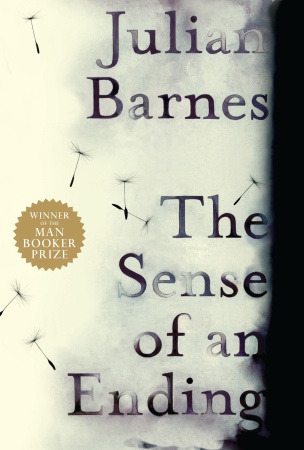
Cover of The Sense of an Ending by Julian Barnes

In The Sense of an Ending, Julian Barnes has written with an understated courage about the tragedy of a man’s coming face to face with his own failings and self-deception near the end of his life.

It’s a sad book because the protagonist, Anthony Webster, gains his wisdom too late—by his own estimation. It’s too late to change his mistakes or to make amends for them. All he has left is “regret, guilt and remorse”—with remorse being the strongest and most terrible of the three, according to Anthony.

Yet it’s a beautiful book, because it is beautifully written. Anthony is carefully, sympathetically drawn. He is a kind of Everyman. He is not evil (though when shown a letter he had written four decades earlier, he is shocked by his own jealousy-provoked viciousness); rather he is by turns bumbling, self-centred, passive, and insensitive. I can only gasp at Barnes’s writing skill; somehow, he makes us like Anthony in spite of (or because of?) his ordinariness, his lack of heroic qualities.

The Sense of an Ending is a very good novel until the last four pages. But it’s the shocker ending that most displays the author’s virtuosity. Like Dostoyevsky’s The Brothers Karamazov, like Bill Gaston’s The Good Body, this is a book that demands rereading to figure out just how the writer was able to put it all together with such ingenuity.

I don’t have to give away the ending to explain the source of the book’s power. I think it comes from the comparison of our own lives with Anthony’s. If we are old, do we share his emotions, or have we lived more fully? If we are middle-aged, this book is a warning. Anthony’s revelations come too late. There were points in his life when he could have been more honest with himself and others about what he felt and what he wanted. He could have made other choices instead of going with the current, following the path of least resistance.

I don’t need Anthony’s warning.

Going through a textbook mid-life crisis, I changed my life completely between the ages of 48 and 52. Some of the choices I made were planned—going back to school to train for a new career as a writer and leaving my husband—but others were not. I didn’t count on wrecking my knee and losing my running career, which was such a big part of my identity. I didn’t know my coach George Gluppe’s health would deteriorate rapidly and that he would pass away last April. I wouldn’t have chosen to have everything in my life go all topsy-turvy within the space of a few years.

But there were many stimulating and joyful beginnings, times of being amazed by the realization: It’s not too late!
There are also those middle-of-the-night times of panic, when the darkness spreads to gut-deep despair and my fear: I’ve left it too late!

But I can only start from today, and welcome my unfolding new life. I don’t know how it will all turn out. I don’t know what my “sense of an ending” will be, two or three or four decades from now (if I live that long). All I can know for sure is that I won’t share Anthony’s remorse about not having tried to change.

WordNerds: A year of omnishambles?

Deliquescent and Omnishambles

water on leaves and flowers

When I read the novel The Sense of an Ending by Julian Barnes almost a year ago, I wrote down a lovely-sounding word I read in there somewhere—deliquescent. If I had the e-book, I’d be able to find the word again and explain the context—I don’t remember it now! I only know I love the sound of it.

Canadian Oxford wasn’t very helpful with its definition of this word.It tells me that deliquesce (verb) means to “become liquid” and that deliquescent (adjective) is derived from Latin words that mean “to be liquid”.

wet leaves on bench

Omnishambles

a hectice officeTwo days ago, The Vancouver Sun reported that The Oxford University Press has chosen “omnishambles” as Britain’s Word of the Year. Defined as “a situation that has been comprehensively mismanaged, characterized by a string of blunders and miscalculations,” the word has been omnipresent this year, referring to events as diverse as preparations for the 2012 London Olympics and various government PR disasters. “Omnishambles” was coined by the writers of the TV show The Thick of It.

Being selected as Word of the Year doesn’t guarantee that omnishambles will find its way into a future edition of the Oxford English Dictionary. Its evolving usage and longevity will determine its fate. Personally, I’m rooting for its inclusion and think it has a good chance!

Follow-up to “One space after a period”: Complications

There are some exceptions to the general rule to use only one space following a period at the end of a sentence. If you are writing a plain-text document that is likely to be viewed with a fixed-width font like Courier, it is often a good idea to insert two spaces after a period. “Plain text” includes no bold, no font choices, no font sizes, etc., just letters, numbers, punctuation, and manually-entered whitespace like newlines and indents created with space characters.

Here are some examples of documents that are created using fixed-width fonts (in some cases they can be viewed with variable-width fonts, but in other cases they are viewed with fixed-width fonts):

  1. Almost all computer programming is still done with fixed-width fonts because the vertical alignment of things tells a lot about their logic; although there aren’t real sentences in the programs themselves, they tend to be full of comment blocks explaining (with English text) what is going on, and those typically still use two spaces after periods. HTML tags are included in this type of document.
  2. Another place where people write in “plain text” and often view with a fixed-width font is in so-called README files that you find online explaining what is in a folder (for example), or at the top of a CD-ROM explaining the contents.
  3. Basic email is sometimes written in “plain text,” for example, from a Blackberry, and that will sometimes be rendered by email programs (the recipient’s viewer) in a fixed-width font.
  4. For academic dissertations, some universities still follow an APA Style recommendation to include two spaces after a period in “draft” manuscripts. There seems to be a good deal of confusion about this point, and most editors recommend checking with a specific university’s style guidelines.

I would like to acknowledge the assistance of my “software genius” brother Alan Rooks for explaining the first three points above to me. More details are available if required.

WordNerds: Kafkaesque

Since I recently wrote a post that quoted Franz Kafka, I decided I’d like to write about the word “Kafkaesque” today. Imagine being such a famous writer that an adjective is created from your name!

Canadian Oxford’s definition follows:

Kafkaesque: (of a situation, atmosphere, etc.) impenetrably oppressive, nightmarish, in a manner characteristic of the fictional world of Franz Kafka.

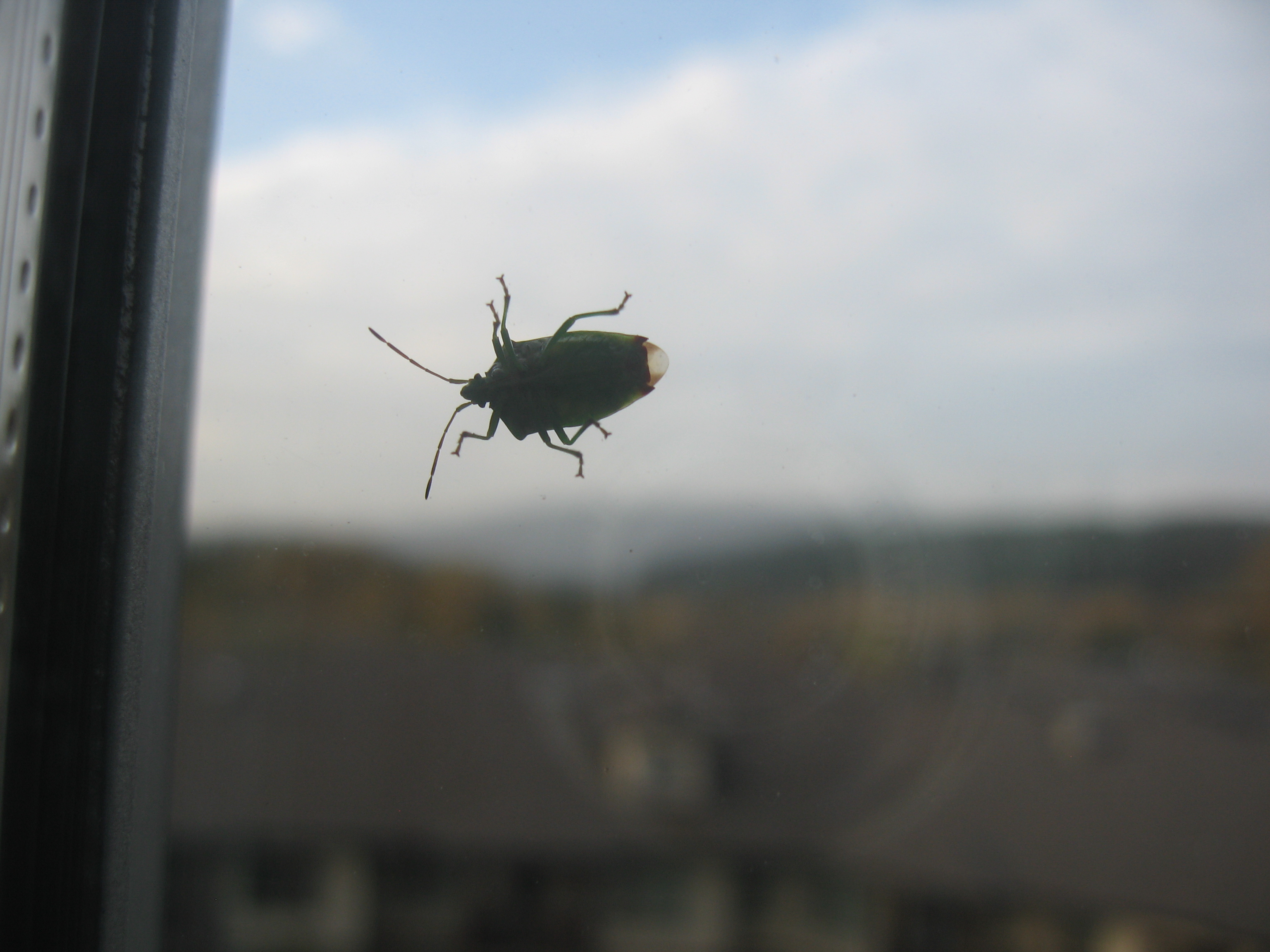
beetle on window

Someone took this photo of me this morning!

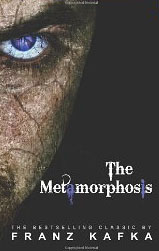
Kafka is perhaps most famous for his 1915 novella The Metamorphosis, in which his protagonist Gregor Samsa wakes up one morning to find he has been inexplicably transformed into an ungeheuren Ungeziefer (usually translated as “monstrous vermin” or sometimes simply “bug”).

cover of The MetamorphosisApparently, Vladimir Nabokov, who was not only a great writer (Lolita, Pale Fire etc.) and literary critic but a serious lepidopterist, interpreted Kafka’s text to mean that Gregor was a 3-foot-long beetle.

The book has been studied extensively in universities and has been adapted for the screen and stage many times, most recently as Metamorphosis the Movie (2012), directed by Chris Swanton. According to Wikipedia, this full-length feature film “captures both the intense sadness as well as the rich humour and sense of the bizarre that runs throughout Franz Kafka’s work.”

One space after a period

Aside

A lot of older people who grew up using typewriters still haven’t “unlearned” the rule of putting two spaces after a period at the end of a sentence. This should never be done now. Word processors automatically add the correct amount of space, and if you insert two spaces between sentences, the resulting text will look poor, containing large chunks of empty space.

Book Review: Bill Gaston’s The Good Body

Cover of The Good Body by Bill Gaston

The Good Body was published in 2000.

With The Good Body, his 2000 breakthrough novel, Bill Gaston proved two things: he is a writer of dazzling virtuosity, and a man with a huge heart. How else to explain the way he can get inside the minds of such a wide variety of characters, each flawed, whether pitiful, cruel, despicable, or self-righteous—and make us able to see each person in a sympathetic light? Gaston’s protagonist in this novel is Bobby Bonaduce, a man who’s been a minor league hockey player for twenty years. Now, at forty, he knows his 50-second period of ice time during an emergency call-up from the Leafs will be his only taste of the big time. Worse, he’s been diagnosed with multiple sclerosis and is already experiencing symptoms of his body’s betrayal.

When his minor league Tulsa team folds, Bonaduce decides to return to his hometown, Fredericton. It’s an impulsive decision propelled by a letter from his son Jason. Bonaduce has rarely seen his wife Leah or his son since he abandoned both nearly twenty years before. Now, Jason has written that he’s going to the University of New Brunswick and will play on the varsity hockey team. Bonaduce, in denial about his MS, plans to enrol in the university as a masters student in creative writing and join his son on the team.

A combination of bravado, determination, and plagiarism allows Bonaduce to achieve the first part of his goal—getting accepted into the grad program in creative writing.

After that, his struggles are constant and heart-wrenching. Living in a decrepit house with a group of students, Bonaduce strikes up a friendship with an overweight young woman. The two enjoy playing Yahtzee, a game played with five dice and their many permutations. If life is a roll of the dice, Bonaduce has an endless string of bad rolls. Yet against the background of his ever-worsening MS symptoms, Bonaduce fights with immense spirit. He’s not allowed to play on the varsity team. His fellow students and teachers, mostly humourless academics stuck in their ivory-tower world, repel his attempts at friendship.

As if his physical and financial problems aren’t enough, Bonaduce is also emotionally devastated. He is still in love with Leah, but she is in a long-standing relationship with a lawyer named Oscar, a man who couldn’t be less like Bobby Bonaduce. And Bonaduce is obsessed with his hope of establishing a good father-son relationship with Jason, who remains distant and uncaring. Gaston is masterful at depicting the torment Bonaduce goes through, his adolescent-like desire for Leah and the biological power of his guilt about the son he’s never gotten to know.

Gaston’s writing is so extraordinary that I could probably find quote-worthy examples on every page of the book. He’s especially good at his portrayals of minor league hockey, whether using his authorial voice or through Bonaduce’s class writing “samples.” We understand both the shame of being “only” a minor-league player, and the overriding love of the game that motivates these men.

On the ice is where it really happened. The brilliance of some. All senses sparking, working at the widest periphery, aflame with danger and hope both, seeing the whole picture, the lightning-fast flux of friends and enemies, the blending of opportunity and threat. Words didn’t stand a chance here. Words were candy wrappers, dead leaves.

I could relate to Bonaduce’s experience of being an aging athlete. It’s hard to let go. It’s never the same being a coach or spectator as being an athlete. The middle-aged body can still feel a joy in action that brings back the sense-memory of how the body moved in its prime. It’s only the damning evidence of stopwatch or camera that shows the body’s deterioration.

As Bonaduce’s life spirals down towards catastrophe, we cringe, we bleed at life’s unfairness. We love this man. Despite his flaws, he’s a hero because he gives everything, he keeps fighting, he finds redeeming slivers in the wreck his life is becoming. This is a book that gets down to life’s basics: love, sex, sensual beauty, mortality. Here is Gaston writing about what Bonaduce is thinking after his one illicit encounter with Leah in a local motel:

C’mon Leah, you did feel it. Pretty little angel eyes. Angel eyes, what a perfect two-word description of love, love that went both ways.

And more about the intimacy that Bonaduce and Leah can’t deny:

Each time they met eyes, they got a version of each other that was surprising and too too full, a potency forcing them to look away, except for a brief few times when they made themselves hold it.

Even Oscar, after finding out about the encounter, acknowledges that Leah and Bonaduce have “unfinished business.” But it’s Bonaduce who knows “there is no end to that kind of business.” The sexual attraction between him and Leah is inextinguishable.

It takes a fearless, peerless writer to make us care about his protagonist as much as we care about Bonaduce, and then give his story a tragic conclusion. But this is real life; this is what makes The Good Body a work of great literature. Redemption comes from Gaston’s sympathetic insight into a wide variety of characters, all fully-fleshed; the gallows humour that pervades Bonaduce’s thoughts; and the indomitable spirit that enables this hero to experience friendship, love, intellectual challenges, and hope in the face of terrible odds.

***

Bill Gaston’s latest novel, The World, was recently given a rave review by Diane Baker Mason in The Globe and Mail. Read it here.

I never read a review of a book before I write my own review, because I don’t want my reading or critiquing to be influenced by someone else’s opinion. However, while googling for a photo of The Good Body I accidentally came across a review of it that I thought was spot-on and profound. If you’re not already sick of reading about this book, read Angie Abdou’s review here.