
 You can download Les Besser’s memoir Hurdling to Freedom from the Hewlett-Packard Memory Project website page here.
Many writers are now publishing digitally. In addition to editing their manuscripts, I can direct self-publishing authors to other professionals who can assist them with e-book conversion, book design, printing, and marketing of their book.
Volunteer editing
Working as a volunteer editor at the Editors BC Blue Pencil event in May 2012 gave me additional experience with structural editing. I worked with four authors, both in-person and online, to offer feedback and guidance about their manuscripts. This gave me valuable experience editing different forms of writing, including science fiction, creative non-fiction, and memoirs.
I also volunteered my editing services at another Editors BC Blue Pencil event in 2015, this time in partnership with the Vancouver Public Library.
Over the past four years I have written articles and copy edited articles for West Coast Editor, the website of Editors BC. My volunteer proofreading with the Vancouver Writers Fest led to a paying position as the editorial co-ordinator for their Program Guide in 2014 and 2015.
You can download Les Besser’s memoir Hurdling to Freedom from the Hewlett-Packard Memory Project website page here.
Many writers are now publishing digitally. In addition to editing their manuscripts, I can direct self-publishing authors to other professionals who can assist them with e-book conversion, book design, printing, and marketing of their book.
Volunteer editing
Working as a volunteer editor at the Editors BC Blue Pencil event in May 2012 gave me additional experience with structural editing. I worked with four authors, both in-person and online, to offer feedback and guidance about their manuscripts. This gave me valuable experience editing different forms of writing, including science fiction, creative non-fiction, and memoirs.
I also volunteered my editing services at another Editors BC Blue Pencil event in 2015, this time in partnership with the Vancouver Public Library.
Over the past four years I have written articles and copy edited articles for West Coast Editor, the website of Editors BC. My volunteer proofreading with the Vancouver Writers Fest led to a paying position as the editorial co-ordinator for their Program Guide in 2014 and 2015.
Nancy Tinari coordinated a team of volunteer professional editors to proofread and edit the 64-page program guide of the 2014 Vancouver Writers Fest. The job, which involved fact checking book and publication details, biographical information, schedule dates and times, and French language copy, was done to deadline and to the highest professional standards, and using our company’s style guide. Nancy’s coordination of the editing was efficient and her communication with me was clear and precise. I would not hesitate to recommend her services.
—Ann McDonell, Director of Marketing & Development, Vancouver Writers Festival
Designing and Editing For projects that involved both document design and editing, please see my Promotions and Design page. Questions Why do I need an editor? If you’re a small business owner, you might think you don’t need an editor for your website or promotional materials. Perhaps you’re an excellent writer, or a friend helps you with proofreading. It’s true that some people need editors more than others, but everyone needs an editor—even editors themselves. Editors are trained to catch errors and improve stylistic writing problems that even those with an excellent command of language may not be able to do. The reality is that our education system does not train people to write well or to understand the complexities of English grammar. Many people even believe that correct spelling, grammar, and punctuation aren’t very important in today’s fast-paced, visual world. I strongly disagree—so please keep reading!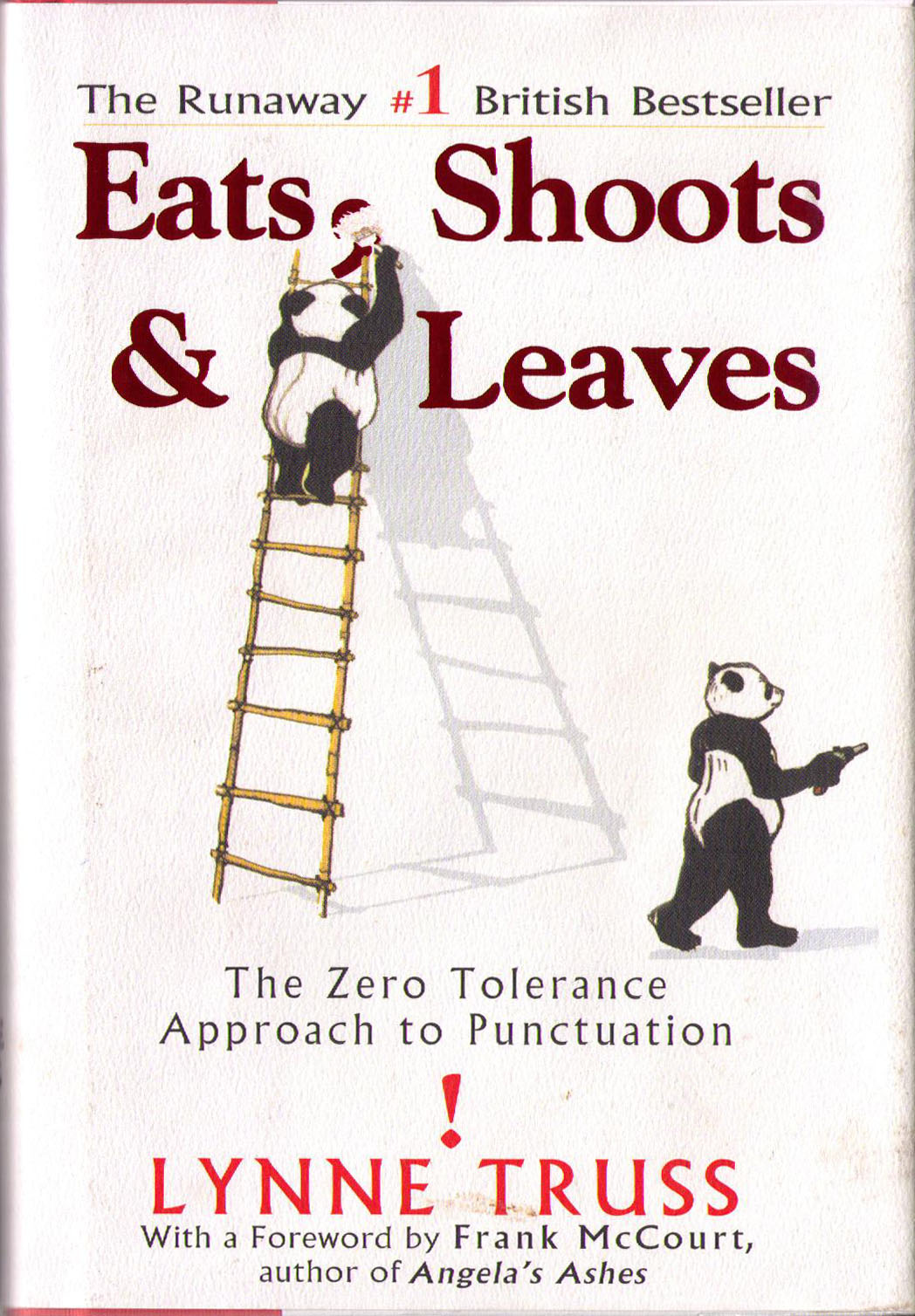
Lynne Truss proved that even a book about punctuation could be a bestseller.
- Be confident your website looks professional. Spelling mistakes, clunky grammar, or other errors create a bad impression that destroys your credibility.
- Get your message across clearly, concisely, and persuasively. Editors are trained to write in a style that is audience-focused.
- Ensure all your written materials are consistent with respect to spelling, punctuation, and formatting choices. There is often more than one “correct” spelling or punctuation choice; an editor can help you make the choices that are most appropriate for your audience, based on your business field, your country, and other factors. Editors usually create style sheets for each organization they work for so that consistency is maintained across the organization. You can read more about style sheets near the bottom of this page, and view a sample style sheet.
- Delegate tasks that you don’t have time for to a professional whom you trust. Editors can do fact checking, source photos, and obtain copyright permissions. Some editors will also write your social media messages or blog posts.
- If English is not your first language, use an editor to ensure that all messages targeted for English speakers are written in fluent, audience-appropriate English.
Tools of the editor’s trade
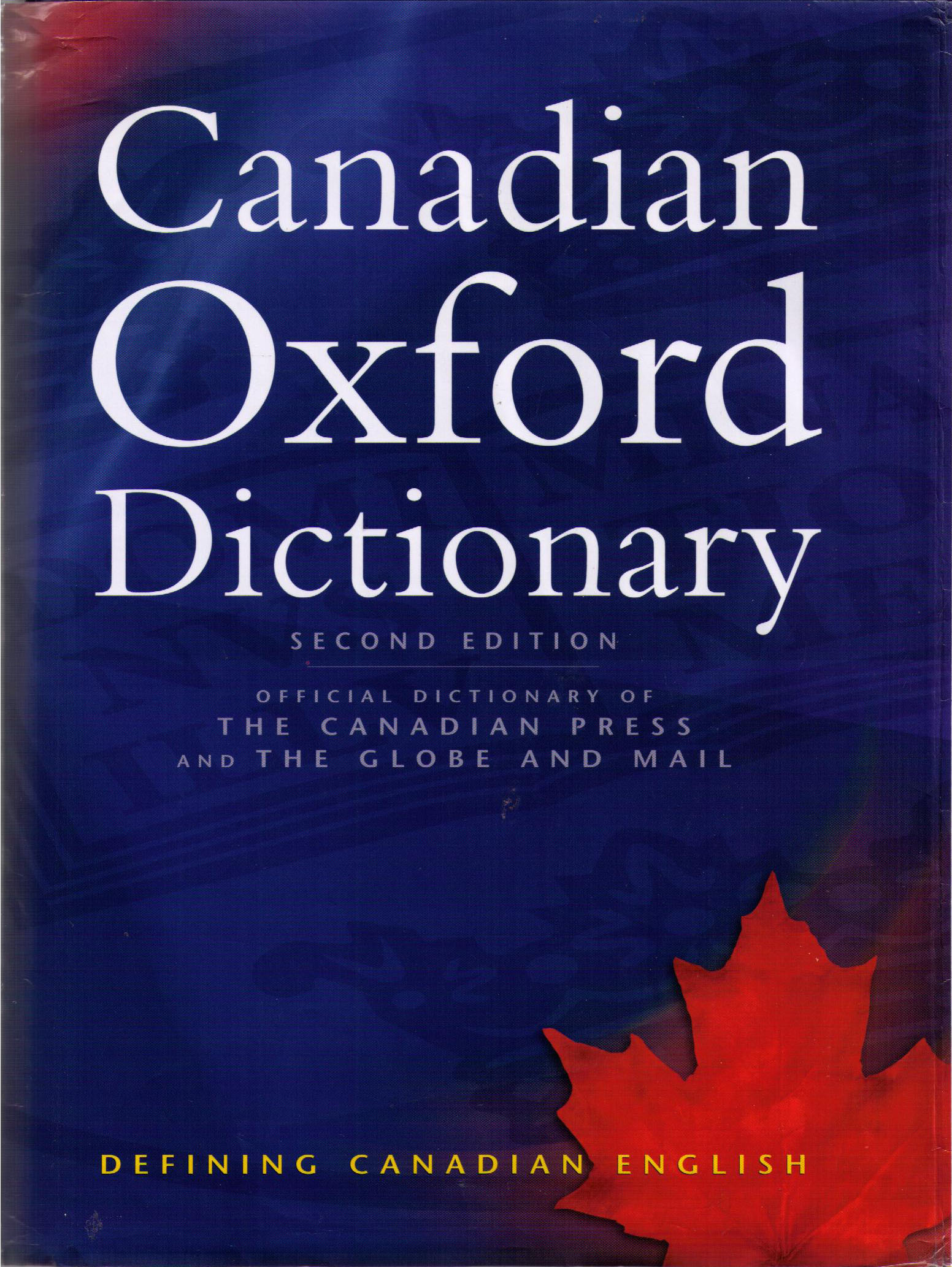
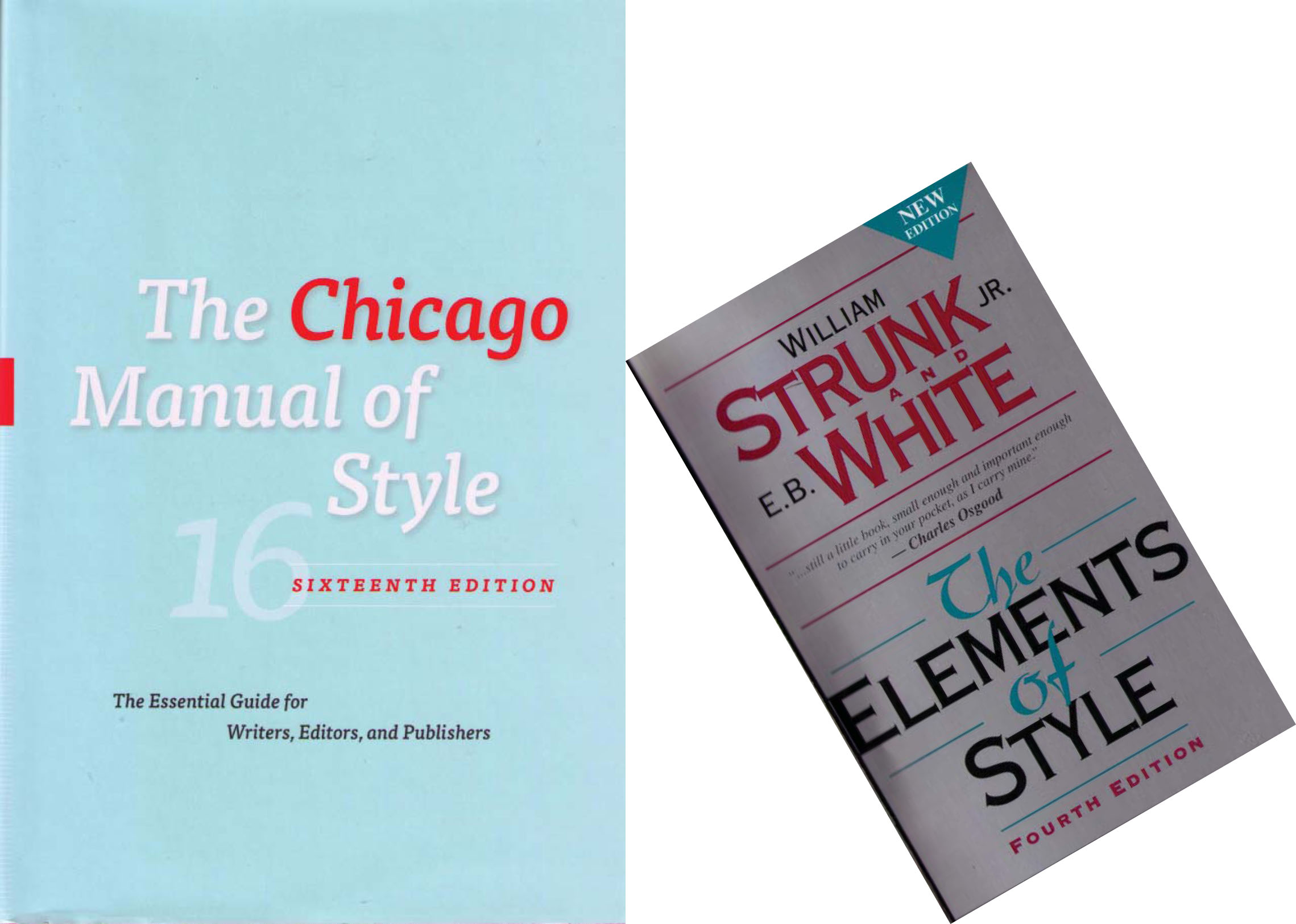
A good dictionary is a must, but it can’t replace an editor.
Your time has value, and you have to decide how it is best spent. Editors check documents for a living. They can do it faster, better, and more cost-effectively than you can possibly do it yourself. In economics terms, the opportunity cost of employing an editor is very low to anyone who is self-publishing. That’s because you can use the time you save to sell more books… or get started on the next book.
What do I charge? I offer you personal, flexible, and reliable service at very reasonable rates. Every editing project is unique so I prefer to discuss rates after you contact me to describe your needs. Style Sheets What is a style sheet? A style sheet is a document used by editors, writers, and organizations to ensure that all their written communications are consistent with respect to spelling, punctuation, treatment of numbers, capitalization, and other features. Most people are aware that there are many variations in English spelling between different countries such as Canada, the United States, and Britain. You might be surprised at how many hyphenation and word compounding differences there are between these three countries as well. And although most words have only one “correct” spelling, some words have more than one version that is considered acceptable. In addition, some punctuation rules are considered fixed, but other punctuation choices are a matter of taste and style. What is important is that the spelling, punctuation, and other formatting choices are kept consistent—whether within a single document, a website, or the whole array of an organization’s communication materials. A style sheet for a simple document might consist of a single page. The style sheet for a large corporation might be many pages long, with additional sections with guidelines that apply only to specific documents. It’s easy to understand that in an organization where many different writers, editors, and marketing people might be contributing to written materials, they will all need to adhere to the same style guide in order to maintain consistency. This consistency becomes part of a company’s branding, and a lack of it looks sloppy and confusing. Even a single editor working on a book by a single author must work with a style sheet. It’s impossible to remember all the style choices that both author and editor make, especially over the course of a long manuscript. Style features covered by all style sheets What dictionary is the guiding authority for spelling choices? What style book (for example, The Chicago Manual of Style, Canadian Press Style Book) is the guiding authority for various style questions? Note: all exceptions to the choices advised by the listed dictionary and style book should be mentioned in the style guide. Sometimes an author will insist on a non-standard spelling or style. Punctuation: For example, is a comma included before the final word in a series (the Oxford or serial comma)? Numbers: Which numbers are spelled out, and which ones are written as numerals? Date and time: What format is used? Capitalization: should follow the style book, but list cases where confusion could be common or where exceptions are made. Italics and bolding: where are they to be used? Heading and subheadings: What are the formatting choices? Spelling: include a list of words that may commonly be spelled in different ways. Note any exceptions to the spelling advised by the reference dictionary. Abbreviations and acronyms Sample Style Sheet To show just how comprehensive a style sheet for a single book can be, I’m including below the style sheet I used when editing Les Besser’s historical memoir book, Hurdling to Freedom. This long style guide is divided into two sections: the first section consists of an alphabetized spelling list (following American spelling at the author’s request), and the second section deals with style and formatting choices. (Style sheet used with the author’s permission.) Hurdling to Freedom Style Sheet Updated June 26, 2012 Dictionary: Merriam-Webster (American English) Style Book: The Chicago Manual of Style (16th ed.) Part I—Alphabetical list of problematic words A air raid (noun, adjective) air-conditioning company airsickness airmail anaesthesia (can omit 2nd “a” but spelling shown is first choice in both American, Canadian dictionaries anemic armed forces Army: capitalize when used as part of a title of a particular army; i.e. German Army but Hungarian army uniform Arrowcross Party Audio—don’t capitalize department names B baby boomers backyard barracks (pl) bed-renter benefiting best-seller (adj.) brain drain breaststroke brokenhearted busses (pl.) C Cabinet (political) checkpoints coauthor coin purse Cold War comma—serial comma Compact Engineering or Compact for short (the company), COMPACT (the program), Super-COMPACT (for minicomputers) counteroffensive counterrevolutionary court-marshal coworker crewcut cross-country (adj., noun?) D Defense Department deliveryman directions: southeastern but Eastern Station (proper name) E earflaps Earth (referring to our planet) Eastern Bloc Eastern Front easygoing e-mail equaling end user (software) enroll F fascist firsthand Five-Year Plan flowcharts footnote style: period at end. forint Fradi freehand French Canadian (n), French-Canadian (adj.) G Geiger counter gluing goalpost good-bye good night Goose-Tender Matty (or Matyi) government (only capitalize Hungarian) gravesite (Canadian Oxford, not shown in Merriam-Webster) gravestone guerilla Gypsy H halfway hand grenade (n.) hand-grenade (adj.) high chair hi-fi (short for high fidelity but would never be written out in full) Dictionary notes “1950.” high jumping (n. and adj.) high-rise hot plate house master housecleaning Hungarian Revolutionary Worker-Peasant Government (note capitalization of “government” here as it is part of a title.) I Internet J judgment (first choice in Merriam-Webster, though e after g is a permissible alternative.) K kilometers kolbassa kosher L laid-back light-beams lightbulb livable longtime loudspeaker M maneuver Master’s degree meter movable multilingual N naive (no special “i” is permissible according to Merriam-Webster) name-calling National ID book Nazi nerve-wracking nickname nighttime nose guard Numbers One to nine. 10 and up. 14th 10 x 10, 4 x 4 10 x 400-meter three-foot-thick walls 21st century 1990s O one by one Oriental outjumped P paddy wagon passersby past life (n.) past-life (adj.) Ph.D. Ping-Pong Politburo (no italics because the word is well known in English) postwar R railway station names: Southern, Eastern (capitalize) rat race red-light district reboarding recoding reelected reenactment reenergize résumé revolution (Hungarian Revolution) rundown S schoolbags scoutmaster seat belt sewn (p.p.—“sewed” is correct but 2nd choice in dictionary) ship workers shortwave (radio, adj.) and shortwaves (n.) sizable skyrocketing small-group (adj.) smart aleck (n.) smart-alecky (adj.) socialism Soviet Commander spike shoes sport jacket sports bags sports car stationmaster steak house sweatsuit T T-shirt tailwind takeoff tear gas (n) tear-gas (v) TEJÉRT time: 10 p.m. 6 a.m. tool box track and field clubs? (n. yes, adj. not given) track man track suit track team (n.) trailer home (n.), trailer-home (adj.) traveling tube tester U United States, U.S., U.S. dollar University of Dubuque, U. of D. V (the) Valley W warm-up water polo water ski (n.), water-ski (v.) weight training (noun), weight lifting (noun) weight-lifting (adj.) West Coast Western (movie, nation, to do with nations of the West) Western Railroad Station Wiener schnitzel workbench workday World War I or First World War WC X X-ray Y yoghurt Part II—Formatting issues: layout, capitalization, italics, abbreviations, numbers Capitalization Mother (when used as name), but “my mother, my mom” First Confession, Communion revolution, Hungarian Revolution Communism, Communist are capitalized since this is the most common usage. Fascism, socialism and capitalism are consistently lower case (for the same reason.) Capitalize Junior, Under-16 when referring to track age categories. consulate. Capitalized only when part of a specific name. Hungarian National Track Team Canadian immigration documents San Francisco Airport Capitalization of Titles Business/Organization job or position titles: do not capitalize. When referring to a company, do not capitalize “the board” or “board members.” Examples: president, vice president of marketing, vice president of mergers and acquisitions, vice president of engineering but “one of the VPs” (informal) Political titles: capitalize. Examples: President and Supreme Commander of Yugoslavia [Marshall Tito] Italics: When should they be used? 1) Les’s inner thoughts. 2) Hungarian place names, school names, monument names. 3) Military operations. 4) Special events (Hungarian names). 5) German names of special military divisions. 6) Les’s present-day thoughts i.e. “afterwords” like comment about opera p. 208. 7) Names of newspapers, magazines, books. 8) Names of sports clubs. 9) Acronyms of Hungarian organization names. 10) Names of Hungarian businesses. (Not Audio because it is an English word.) 11) Special Hungarian titles. Nagymama, nagypapa, except when used as a personal name. Elvtárs, Szaktárs. 12) Names of foreign currency. forint Italics: not used: 1) Personal names, even though Hungarian. 2) néni and bácsi (even though they are Hungarian words, they are used as a form of address, as part of someone’s name. Abbreviations AYSO (American Youth Soccer Organization) B’s (grades in school) Ph.D. TB. Write tuberculosis at first mention. TV. Use sparingly where informality seems appropriate. U.N. Write out in full first. UC Berkley UCLA United States, U.S. Use short form when informality seems appropriate or where used as an adjective. VPs (informal for vice presidents) Numbers One to nine. 10 and up. 14th 10 x 10, 4 x 4 10 x 400-meter relay 1990s three-foot-thick walls Layout Issues- Use of paragraph indents. Note paragraph first-line indents are different on practically every page! Preface uses, Acknowledgements doesn’t.
- Layout: Final: Think about consistent line spacing, right/left indentation, paragraph indentation. Italicized sections within chapters need to have space above and below. There should also be spaces before and after chapter subheadings and below image captions.
- Captions: Bold. Period at end. Same font as body text. One point smaller.
- Footnote style: period at end. No bolding or italics. Calibri font. Two points smaller than body text. Left-justified.
- Chapter headings: Arial, size 14, bold. Indented.
- Subheadings within chapters: Arial, size 11, bold. Indented.
 Nancy Tinari Edits